
Pros and Cons of Owning Chickens in Your Backyard
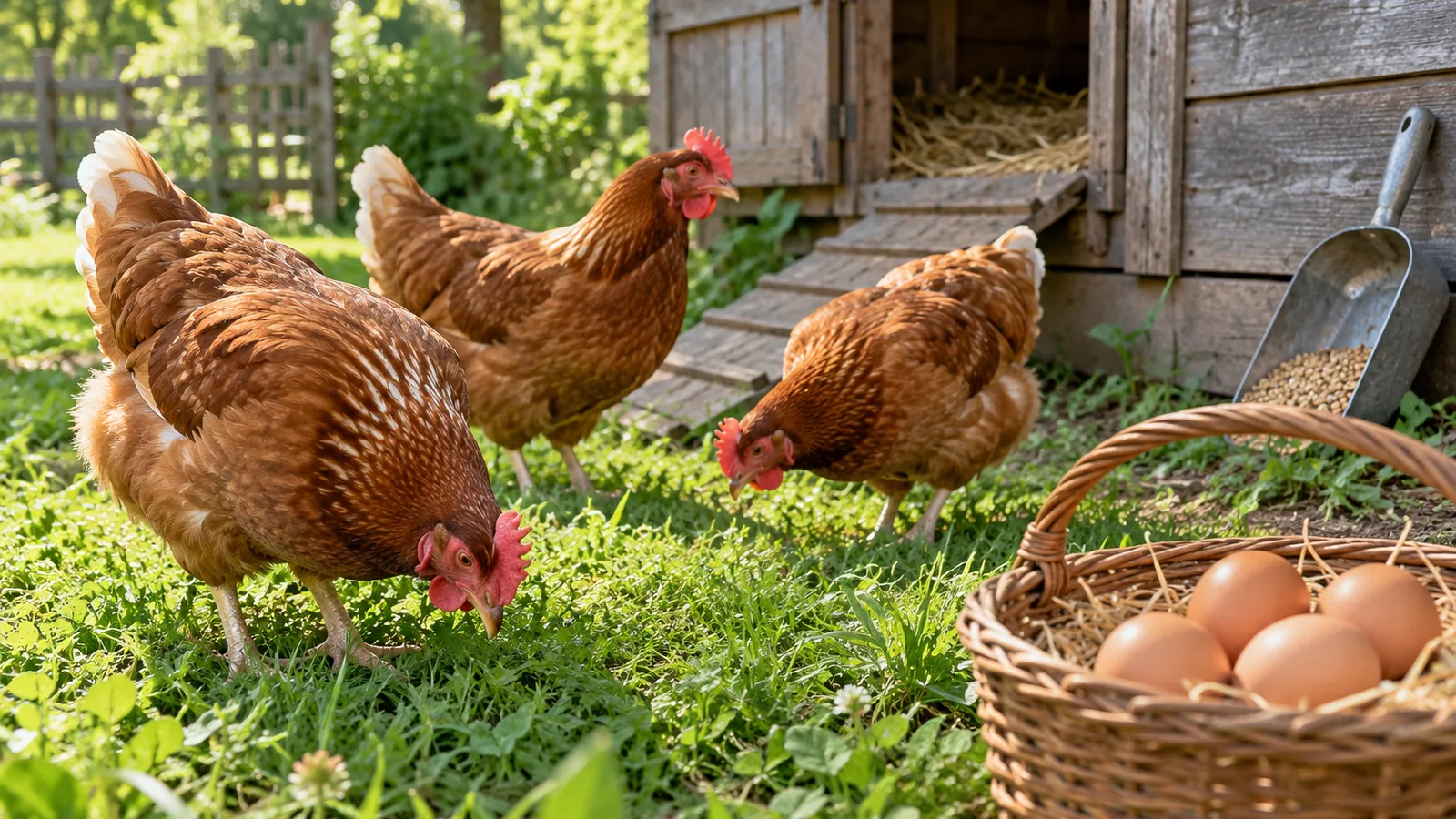
Backyard chickens give you fresh eggs and companionship, plus a chance to learn how to care for animals. But a dozen eggs takes about 4 pounds of feed, and the daily chores never stop. Once you count housing, heat, and electricity, homegrown eggs are rarely cheaper than store-bought. Estimate your monthly feed bill before you buy hens.
Quick answer
What are the pros and cons of owning chickens?
Chickens give you fresh eggs, companionship, and a lesson in caring for animals, but they need feeding and water changes every day. Backyard eggs usually cost more than store-bought eggs once housing and feed are counted, because a dozen eggs takes about 4 pounds of feed. Plan for about 200 eggs per hen per year, since listed standard breeds range from 100 to 300 and output drops in short winter days.
- Pro, manure use: Hens turn grains, produce, and insects into eggs, and their manure can be composted for your garden.
- Con, feed cost: A 6-pound hen eats roughly 3 pounds of feed per week, so the bill grows with every bird.
- Con, germs: Children younger than 5 should not handle poultry, and everyone should wash hands after touching birds or their gear.
- Check first: Confirm your city or county ordinances and homeowners association rules allow hens before you buy birds.
- Space: Give each bird 3 to 5 square feet of indoor coop space, with one nest box for every 4 to 5 hens.
What benefits can chickens bring to your home?
Breed matters when you choose birds, since output differs from one breed to another. Age and conditions matter too, and day length can shift how often a hen lays.
Hens need 14 to 16 hours of light a day to keep laying steadily, and molting temporarily cuts production. Plan around that variability instead of counting on a fixed supply of eggs each week.
Pro tip
Manure needs management to limit odor and flies, so set up a compost spot before the birds arrive.
Chickens also offer companionship and an enjoyable activity for kids and adults alike. For families with children, the flock teaches nature and responsibility, since the birds depend on you for their care.
Do backyard chickens save money on eggs?
No, in most cases backyard eggs cost more than store-bought eggs. Home-produced eggs and poultry products are rarely more economical than supermarket products once you count the full setup. Those costs fall into five areas:
- Housing for the coop and run
- Rearing areas for chicks and young birds
- Electricity
- Brooding heat for young chicks
- Feed for laying hens
Feed is the easiest cost to estimate. That figure leaves out the feed used to raise hens to laying age, so your true feed bill starts higher.
Your breed and conditions decide how many eggs that feed produces. Before you buy hens, estimate your monthly feed cost and compare it with what you spend on eggs now. That shows you whether the numbers work for your household.
The cost case gets stronger when you value the hobby itself, including the fresh eggs, the companionship, and the chance to learn. If your only goal is cheaper eggs, a backyard flock is usually the wrong tool.
How much work and space do hens require?
Expect daily feeding and water changes, plus a coop and run cleaning at least once a week or whenever they get dirty. Three recurring tasks make up the routine:
- Feeding and water: fill the feeder and change the water every day.
- Coop and run cleaning: clean both weekly or as needed.
- Manure management: compost the droppings or use them as fertilizer, and manage them to limit odor and flies.
For eight hens, that means 24 to 40 square feet inside and two nest boxes.
The lowest published floor is 2 square feet of enclosed-coop floor space per bird, or 16 square feet for eight hens. Treat that as the bare minimum.
Roosting space is a separate number. University of New Hampshire Extension recommends one linear foot of roosting space per bird, so eight hens need about 8 linear feet of perch.
What risks and neighborhood issues should you expect?
Three risks matter most: germs such as Salmonella, local rules and neighbor complaints, and predators. Each one is manageable if you set up your coop and daily habits before the first bird arrives.
Backyard poultry can carry germs such as Salmonella even when the birds look healthy, and CDC says outbreaks linked to backyard poultry are common. Young children, older adults, and people with weakened immune systems are more likely to get sick from these germs.
Wash your hands with soap and running water after touching poultry, collecting eggs, or handling feed, water containers, or equipment. Keep birds and their gear outside the house, especially away from areas where food or drinks are prepared, served, or stored.
Before you buy birds, check your city or county ordinances and your homeowners association rules. Local rules may limit flock size, require setbacks from neighboring property, prohibit roosters, or prohibit roaming. Noise, odors, pests, and predators are the concerns that can prompt these rules.
Predator and neighbor problems come down to three habits:
- Tight coop: Use a well-constructed coop with tight-fitting doors and windows and a floor that resists digging.
- Clear ground: Keep a debris-free perimeter of at least 6 feet around the coop.
- Confined birds: Keep chickens in your own yard so they cannot enter neighbors’ yards or gardens.
How many eggs and how much feed should you expect?
Treat every figure as an estimate, not a guarantee, because output shifts with breed, age, day length, weather, and molt.
| Breed or flock | Eggs per hen per year (planning figure) | Range in sources | Year | Source |
|---|---|---|---|---|
| White Leghorn | 250 | 250–300 | 2018 | extension.unh.edu (2018) |
| Rhode Island Red | 250 | 250–280 | 2018 | extension.unh.edu (2018) |
| Barred Rock, Black Australorp, Buff Orpington | 200 | 200–280 | 2018 | extension.unh.edu (2018) |
| Easter Egger, Ameraucana | 180 | 180–200 | 2018 | extension.unh.edu (2018) |
| Standard Cochin | 100 | 100–160 | 2018 | extension.unh.edu (2018) |
| Small backyard flock (general) | 200 | 200–240; 150–300 by breed | 2024 | ask.ifas.ufl.edu (2024) |
Chart of the table above.
Use the low end of each range as your planning number, so a slow season doesn’t leave you short. Output also drops in short winter days. Laying falls when day length drops below 12 hours, and 14 hours of light supports maximum production.
Feed is the bigger recurring cost. A hen eats about 0.25 lb a day, or roughly 91 lb a year, and 90–100 lb of feed over her first 13 months of production.
Expect about five months from chick to first egg, so chicks bought in April or May usually start laying around July or August. Output declines with age: a 10-hen flock that makes about nine eggs a day can fall to six or seven after 13 months.
Why do experts recommend different coop sizes?
Plan for at least 3 square feet of floor space per bird. The two sources also measure the space differently, so you can’t treat either number as universal.
- 3 square feet minimum: University of New Hampshire Extension recommendation for floor space per mature laying hen
Utah’s figure counts only enclosed floor space, so an outdoor run doesn’t add to it. Treat 2 square feet as the lowest acceptable number, not a target. If your birds will spend long stretches inside during bad weather, the higher figures give you a safer margin.
At 3 square feet per bird, UF/IFAS’s example of 25 birds needs 75 square feet, and an 8 ft by 10 ft house (80 square feet) meets that requirement. That house leaves almost no spare room, so buy a larger coop if you plan to add birds later. If you can afford the space, aim for Minnesota’s 5 square feet per bird, which gives the flock more room to move around.
Important
Use 3 square feet of enclosed floor space per bird as your planning minimum.
How can you tell if chickens fit your life?
Check three things before you buy: how long you can wait for eggs, how much daily time you can give, and whether your yard and local rules allow birds. If you raise chicks yourself, expect about five months to first eggs.
Egg output also follows the seasons. Hens lay less as days shorten, so plan for a slow stretch in winter. Supplemental light from September 1 to May 1 interferes with the natural molt. Molting temporarily reduces laying, so expect a slow stretch every year.
Age matters too. Production often declines after two to three years, and the drop varies by bird and strain. Hens may lay efficiently for two laying cycles of roughly 50 to 60 weeks each, with a molt between them. Plan for fewer eggs from older hens, and decide ahead of time whether you’ll keep birds that have stopped laying.
Three fit factors matter as much as egg counts:
- A secure yard: Hens that roam may lay under buildings or in bushes, and chickens are vulnerable to predators. Bad weather, severe cold, and frozen water also reduce laying, so plan a predator-resistant run and a way to keep water from freezing.
- Neighbor proximity: Local rules may limit flock size, require setbacks from neighboring property, prohibit roosters, or prohibit roaming. Check your city ordinance and any HOA covenants before you buy birds.
- Veterinary access: Find a veterinarian who treats poultry before you need one. The sources here don’t quantify startup or veterinary costs, so ask local clinics for prices before you commit.
Frequently Asked Questions
Can I keep hens without a rooster?
Yes, you can keep hens without a rooster, though local rules may prohibit roosters. Check your city or county rules before you buy birds.
What should I do if a chick turns out to be male?
Check your local rules first, since some ordinances prohibit roosters outright. If the rules allow one, keep in mind that noise and odors are among the concerns that motivate these rules. Choosing chicks from National Poultry Improvement Plan-certified sources helps you start with breeder flocks tested for specified egg-transmissible diseases.
How should I collect, store, and cook backyard eggs safely?
Collect eggs often, discard cracked ones, and refrigerate them right after collection. Eggs left in nests can get dirty or break, which is why frequent pickups matter. Cook eggs until both the yolk and white are firm, reaching 160°F (71°C) or hotter.
Will free-ranging chickens damage garden beds?
Yes, loose birds can get into garden beds, so keep them confined to your own yard. Chickens eat grains, produce, and insects, so vegetables are an easy target. Once composted, their manure can enrich your beds instead.
How much does it cost to start a small flock?
Start-up costs come from housing, rearing areas, electricity, brooding heat, and feed. Plan on about 91 pounds of feed per hen per year. Bedding adds more, since one budget assumes a full change of wet shavings every two months.
Conclusion
If you want fresh eggs and can handle daily chores, pick a breed that suits your yard and your climate. If your main goal is cheaper eggs, a backyard flock is usually the wrong tool. Before you order chicks, check your city ordinance and HOA rules.
How We Researched This
We built this page from 7 sources across 7 publishers, 7 of them official or primary records, led by University of Minnesota Extension, Centers for Disease Control and Prevention, Utah State University Extension and Oklahoma State University Extension. – Coverage: the figures refer to 2018 to 2024; each one names its own year and source. – Where sources disagree, the article reports both figures with their sources instead of averaging them. – We used published records and maker or agency pages only; we did not run tests or surveys, and figures can change after publication.
Sources
- Cracking the Dilemma of Raising Backyard Chickens (extension.usu.edu)
- Raising chickens for eggs (extension.umn.edu)
- Raising Backyard Chickens for Eggs (ask.ifas.ufl.edu, 2024-01-18T00:00:00.000Z)
- Producing Your Own Eggs (extension.unh.edu, 2018-01-09T14:48:03-05:00)
- Backyard Poultry (cdc.gov)
- pubs.ext.vt.edu (pubs.ext.vt.edu)
- Simple Budgeting and Pricing Calculations for Backyard Hens | Oklahoma State University (extension.okstate.edu, 01/01/2021 12:41:22 PM)
